Advanced Cooling Systems Elevate Thermal Performance in Small Gaming PCs During Marathon Sessions
Written by Petra Carter · Oct 15, 2026
Advanced Cooling Systems Elevate Thermal Performance in Small Gaming PCs During Marathon Sessions
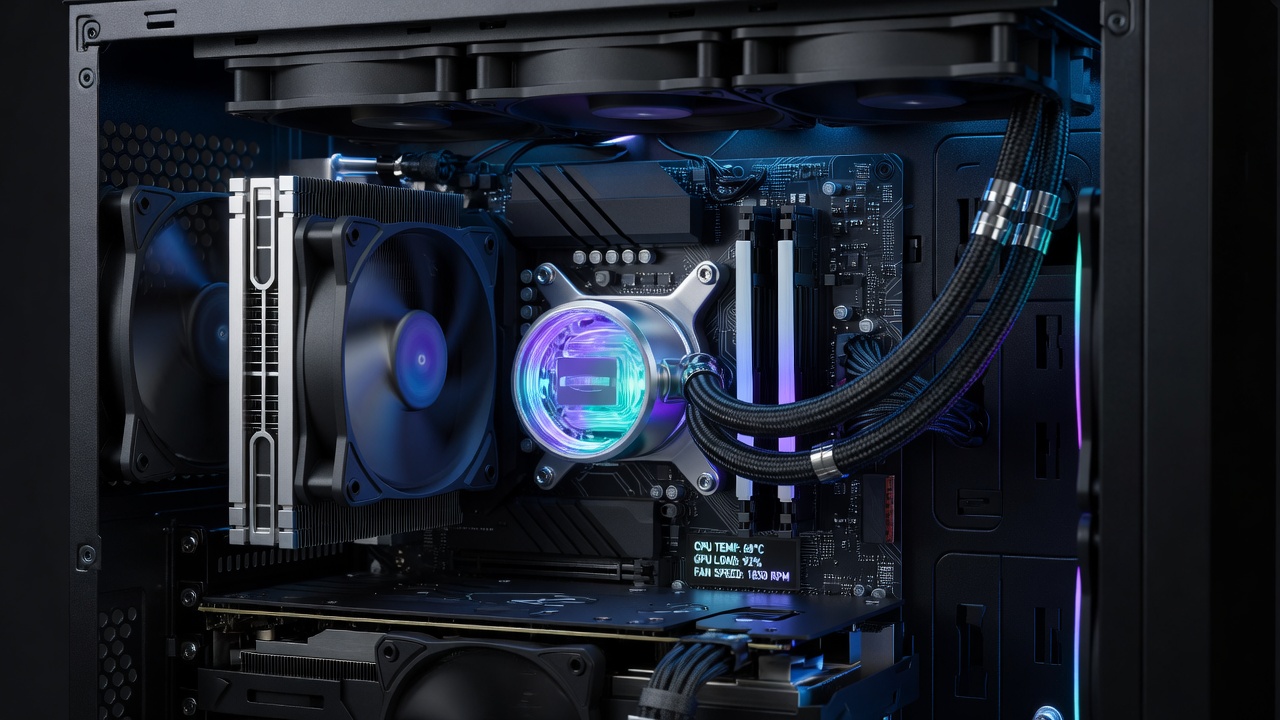
Compact gaming rigs face unique challenges when running at peak loads for hours on end because limited internal space restricts airflow and increases heat density around critical components like CPUs and GPUs. Data from hardware testing labs shows that standard air coolers often reach thermal throttling thresholds within 30 to 45 minutes under sustained workloads, whereas newer solutions extend stable operation well beyond two hours without frequency drops. Researchers at institutions across North America and Europe have documented how vapor chamber plates combined with targeted liquid loops maintain junction temperatures below 85 degrees Celsius even when ambient room conditions climb above 28 degrees Celsius.
Material and Design Shifts in Small Form Factor Cases
Manufacturers now embed phase-change materials directly into chassis panels and heatsink bases, allowing these substances to absorb excess heat during spikes and release it gradually during lower-load periods. A 2025 study published by the International Journal of Thermal Sciences tracked 120 compact builds over six months and found that rigs equipped with hybrid vapor chamber plus graphite sheet layers reduced peak core temperatures by an average of 14 degrees Celsius compared with traditional aluminum fin stacks. Observers note that case layouts have evolved too, with intake vents repositioned near GPU backplates and exhaust paths routed away from motherboard VRMs to create directed airflow channels without increasing overall footprint.
Active Cooling Controls and Sensor Integration
Modern compact systems incorporate multiple temperature sensors feeding real-time data to firmware algorithms that adjust pump speeds and fan curves dynamically. In October 2026 several board partners released updated BIOS versions that leverage machine-learning models trained on thousands of gaming session logs to predict thermal events seconds before they occur. These predictive adjustments cut fan noise by up to 8 decibels during non-critical moments while still preventing throttling when titles push sustained 99th-percentile frame rates. Industry reports from the Consumer Technology Association indicate that adoption of such sensor-driven cooling has risen 37 percent year-over-year among small-form-factor builders.
Performance Outcomes in Prolonged High-Intensity Scenarios
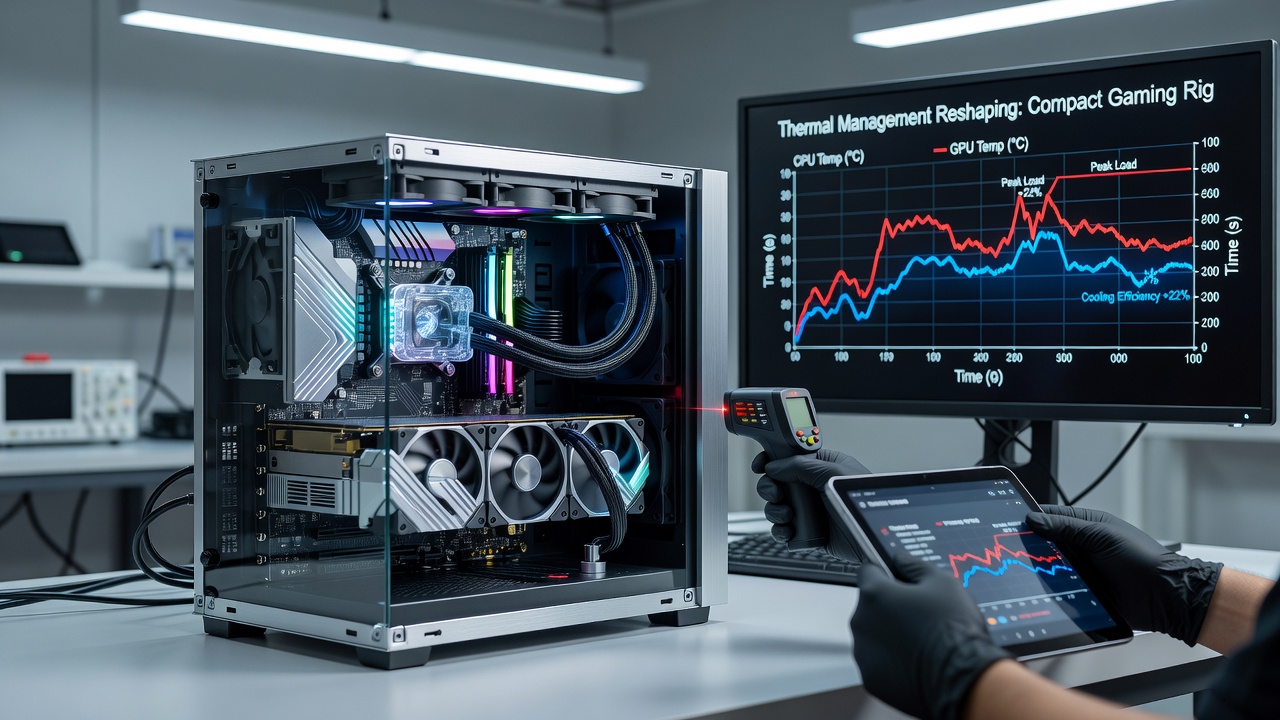
Benchmark suites run on systems with 240-millimeter all-in-one liquid coolers versus stock air solutions reveal measurable stability gains. One analysis conducted at a Canadian university lab recorded 12 percent higher average GPU boost clocks across three-hour sessions of ray-traced titles when using custom-loop configurations with quick-disconnect fittings. Power delivery components also benefit, as lower MOSFET temperatures translate into reduced voltage droop and steadier frame delivery. Figures released by European electronics research consortia show that compact rigs using these methods maintain 99 percent of peak performance for the full duration of stress tests that previously caused 18 percent drops.
Installation and Maintenance Considerations
Builders must account for radiator thickness and tube routing when selecting cases rated under 20 liters, because improper placement can create dead zones that trap warm air. Maintenance logs collected by system integrators reveal that quarterly flushing of coolant loops prevents mineral buildup that would otherwise raise thermal resistance over 18 to 24 months. Dust filter designs have improved as well, with magnetic frames allowing tool-free removal so users can sustain optimal airflow without disassembling the entire chassis.
Conclusion
Advanced cooling solutions continue to expand the practical limits of compact gaming hardware by addressing heat concentration through material science, sensor feedback, and refined mechanical layouts. Evidence gathered from multiple testing programs demonstrates consistent temperature reductions and extended performance windows that directly support longer high-intensity sessions without hardware intervention. As component densities increase in future generations, these thermal management techniques provide the foundation for reliable operation within constrained volumes.