Aligning Display Refresh Rates with Frame Pacing for Fluid Racing Simulations
Written by Petra Carter · Sep 17, 2026
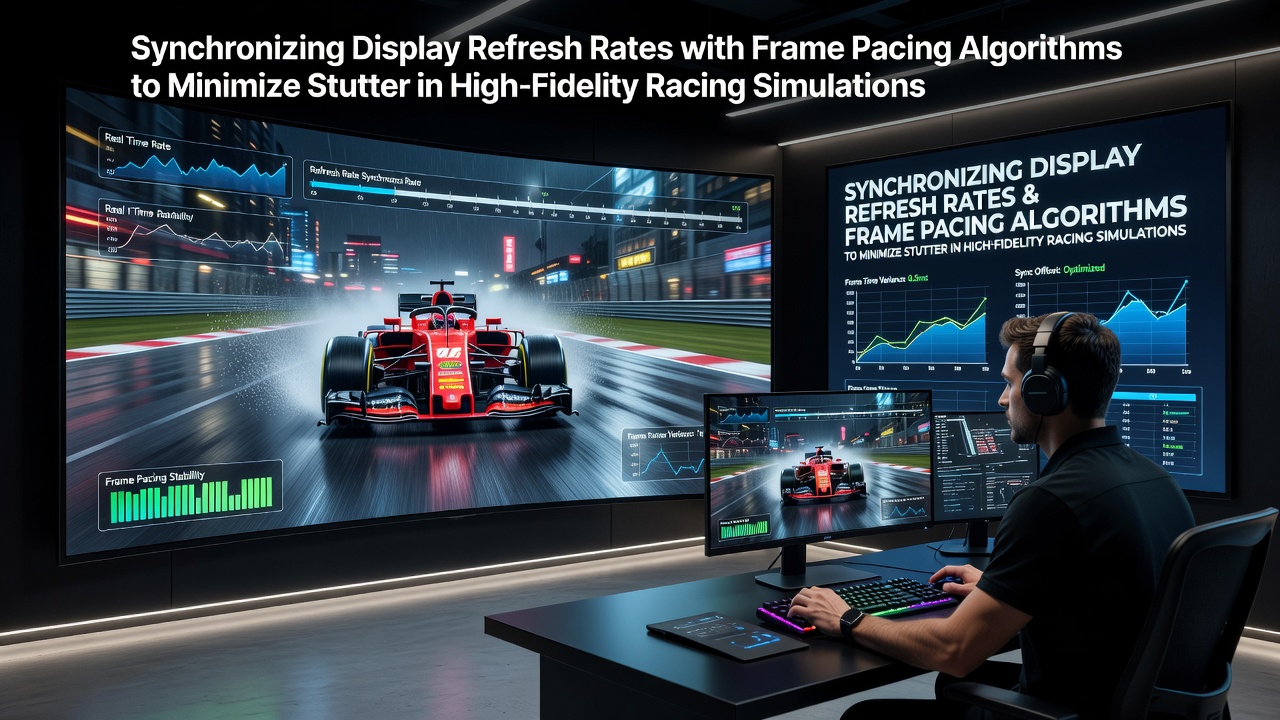
Aligning Display Refresh Rates with Frame Pacing for Fluid Racing Simulations
High-fidelity racing simulations demand precise coordination between display hardware and rendering pipelines because any mismatch produces visible stutter that disrupts immersion during high-speed cornering sequences and overtaking maneuvers. Researchers at various technical institutions have examined how refresh rate synchronization combined with frame pacing algorithms reduces these interruptions across titles such as Assetto Corsa Competizione and iRacing.
Display refresh rates determine how frequently a monitor updates its image while frame pacing controls the consistent delivery of rendered frames from the graphics card. When these two elements fall out of alignment frames arrive either too early or too late creating the perception of judder even when average frame rates remain high. Data from hardware monitoring tools shows that deviations as small as one millisecond can trigger noticeable hitches in detailed environments that include tire deformation physics and dynamic weather effects.
Core Mechanisms Behind Synchronization
Adaptive synchronization technologies such as NVIDIA G-Sync and AMD FreeSync adjust the monitor refresh rate to match the output frame rate within supported ranges while frame pacing algorithms inside game engines schedule draw calls to maintain even intervals. Observers note that racing simulations benefit particularly from these approaches because vehicle telemetry updates occur at fixed physics ticks that must align with visual output to avoid temporal artifacts during braking zones and elevation changes.
Engineers implement pacing by buffering frames and releasing them according to calculated deadlines derived from the current refresh interval. Studies conducted at European research centers indicate that combining vertical blanking interval detection with predictive pacing reduces frame time variance by measurable percentages in controlled benchmark runs. In September 2026 several simulation platforms received patches that refined these buffers to accommodate variable refresh displays operating between 48 Hz and 240 Hz.
Implementation in Racing Environments
Racing titles process complex vehicle dynamics models alongside high-resolution textures and particle systems for tire smoke and debris. Frame pacing routines must therefore account for variable GPU workloads caused by changing track conditions and AI opponent density. Those who have analyzed telemetry logs report that pacing algorithms using exponential moving averages for frame time prediction deliver smoother results than simple fixed-interval methods when scene complexity spikes suddenly at the start of a race.
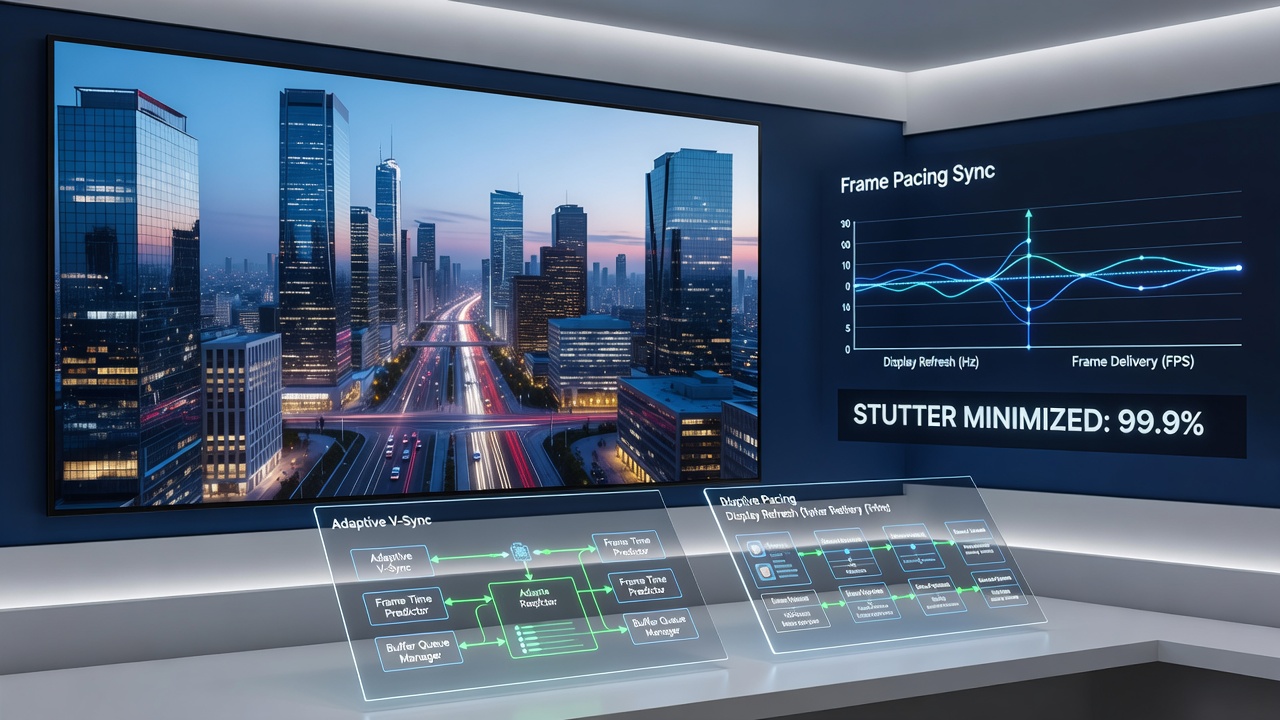
Hardware vendors provide application programming interfaces that expose refresh rate metadata directly to the engine allowing developers to query current display capabilities at runtime. Industry reports from organizations focused on graphics standards document cases where mismatched pacing led to repeated frame duplication on high-refresh panels until synchronization layers were activated. Developers integrate these layers by adjusting the presentation timing call within the rendering loop so that each frame completes its GPU work just before the next vertical blanking period begins.
Performance Metrics and Observed Outcomes
Benchmark suites designed for racing simulations track frame time standard deviation as a primary indicator of smoothness. Figures released by academic groups in North America reveal that enabling both adaptive sync and pacing lowered deviation values from over 4 ms to under 1.5 ms in long endurance race scenarios. These improvements appear consistently across multiple GPU architectures when driver settings permit the monitor to operate outside strict fixed-rate modes.
Engineers also monitor input lag introduced by synchronization layers because delayed control response can affect lap times in competitive settings. Research indicates that pacing algorithms which incorporate input sampling ahead of the render submission stage keep added latency below perceptible thresholds while still achieving stable output. Racing communities have documented these effects through shared replay analysis tools that highlight moments where stutter previously occurred at specific track sections.
Future Directions in Algorithm Refinement
Continued development focuses on machine learning models that forecast frame completion times based on upcoming scene elements such as upcoming hairpins or dense traffic packs. University-led projects explore integration of these predictors with existing pacing frameworks to further compress frame time variance without requiring additional hardware resources. Trade associations representing display manufacturers have begun publishing interoperability guidelines that encourage consistent behavior across different adaptive sync implementations.
Updates scheduled for late 2026 aim to extend support for higher variable refresh ranges while maintaining compatibility with legacy fixed-rate panels still common in simulation rigs. Data collected from distributed user hardware surveys shows growing adoption of these combined synchronization and pacing solutions among enthusiasts who run multi-monitor setups for peripheral vision immersion.
Conclusion
Effective synchronization of display refresh rates with frame pacing algorithms produces measurable reductions in stutter for high-fidelity racing simulations by aligning hardware update cycles with engine output timing. Continued refinement through driver updates and engine patches supports consistent delivery across varied hardware configurations and track conditions.