Linking SSD Write Endurance Metrics to Texture Asset Durability in Persistent Virtual Environments
Written by Petra Carter · Nov 12, 2026
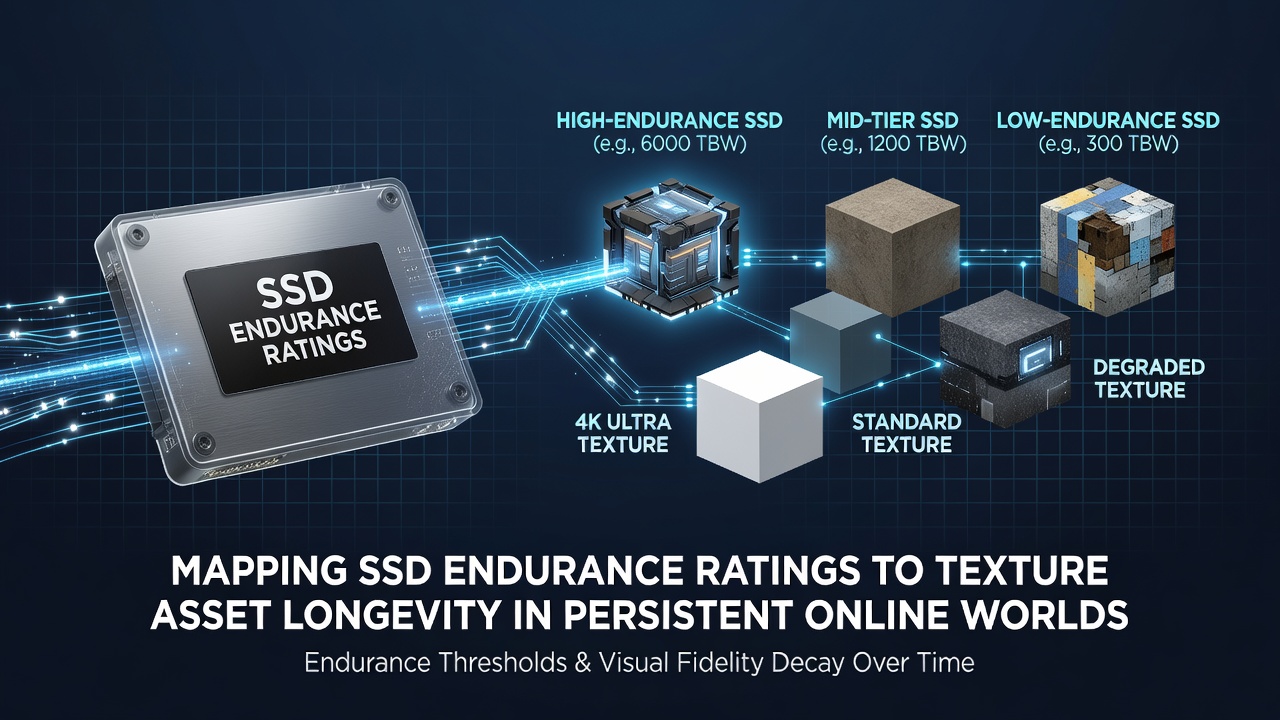
Linking SSD Write Endurance Metrics to Texture Asset Durability in Persistent Virtual Environments
Persistent online worlds require continuous data management as players interact with vast environments, and this process places specific demands on storage hardware endurance ratings, which quantify how many terabytes a drive can write before wear becomes a limiting factor. Manufacturers express these ratings through metrics such as terabytes written and drive writes per day, allowing system designers to estimate operational lifespan under sustained loads.
SSD Endurance Specifications and Measurement Standards
Industry standards define endurance through controlled testing protocols that simulate repeated write cycles across NAND cells, and organizations like JEDEC publish guidelines that storage vendors follow when publishing specifications for consumer and enterprise drives. Research from institutions in Canada indicates that endurance values correlate directly with the volume of data written during texture streaming operations in large-scale simulations, where assets load and unload repeatedly as players traverse shared spaces.
Engineers calculate expected lifespan by dividing the rated terabytes written figure by the projected annual write volume generated by a given application, and this calculation becomes particularly relevant when persistent worlds incorporate dynamic texture updates that trigger frequent disk writes. Data from multiple hardware vendors shows that modern TLC and QLC NAND configurations deliver endurance ratings ranging from several hundred terabytes to multiple petabytes depending on capacity and controller optimizations.
Texture Asset Behavior in Persistent Online Worlds
Texture assets in these environments often exist as layered mipmaps and streaming resources that the game engine loads into memory while also maintaining cached copies on local storage for faster retrieval during subsequent sessions. Persistent worlds such as those supporting thousands of concurrent users generate write patterns that include asset versioning, player-generated modifications, and server-side synchronization that ultimately reach the client drive.
Studies conducted by European research groups have documented how texture compression formats influence the total bytes transferred to disk over time, with higher-resolution assets requiring proportionally larger write operations each time the engine refreshes visible surfaces. Observers note that games released around November 2026 continue to push texture resolutions higher while maintaining backward compatibility with existing endurance-rated hardware through improved streaming algorithms.
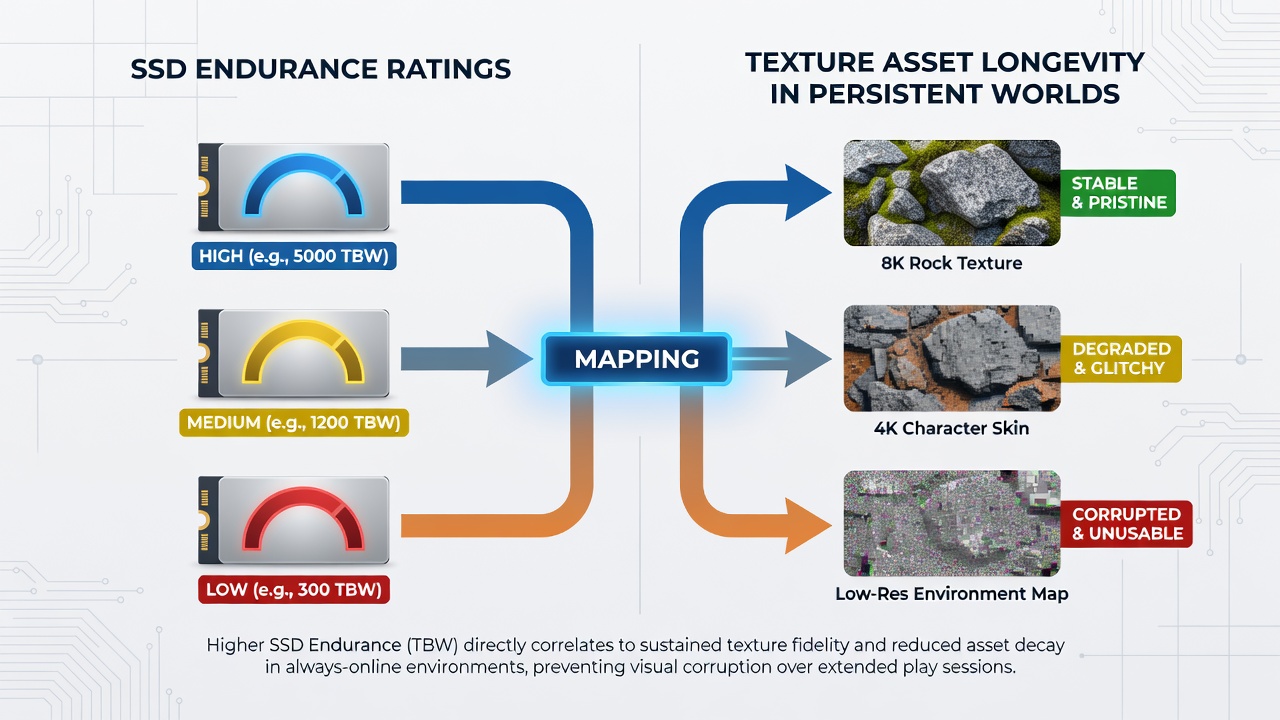
Establishing Quantitative Mappings Between Endurance and Asset Longevity
Developers create mapping models by logging actual write volumes during extended play sessions and then projecting those volumes against published SSD endurance figures, which produces estimates of how many months or years a drive can sustain a particular texture workload before reaching its rated limit. These models incorporate variables such as asset update frequency, player population density, and the proportion of dynamic versus static textures present in each zone.
Figures from Australian academic reports reveal that certain persistent environments generate between 50 and 200 gigabytes of texture-related writes per user per month under typical usage patterns, allowing direct comparison against drive specifications to determine safe operational windows. When a drive carries a 600-terabyte written rating and monthly writes average 150 gigabytes, the resulting lifespan projection reaches approximately 400 months before endurance exhaustion occurs under constant conditions.
Practical Implications for Hardware Selection and World Design
System administrators responsible for large-scale deployments select drives whose endurance ratings align with anticipated texture write volumes, and this selection process incorporates headroom to account for unexpected spikes during major content updates or seasonal events. Software engineers adjust texture streaming budgets and caching policies to reduce unnecessary writes, thereby extending the effective longevity of both storage hardware and asset data integrity.
One documented case involved a North American studio that revised its asset pipeline after internal measurements showed texture writes exceeding original projections by 35 percent, prompting a switch to higher-endurance drives and modified compression settings that brought write volumes back within acceptable bounds. Such adjustments demonstrate how mapping endurance ratings to asset longevity supports informed decisions rather than reactive replacements.
Conclusion
Mapping SSD endurance ratings to texture asset longevity supplies a practical framework that connects hardware specifications with the operational demands of persistent online worlds, enabling more accurate planning for both storage hardware and content pipelines. Continued measurement of write patterns alongside evolving texture technologies will keep these mappings current as environments expand and hardware specifications advance.